VALORANT Champions Shanghai Group Stage Explained
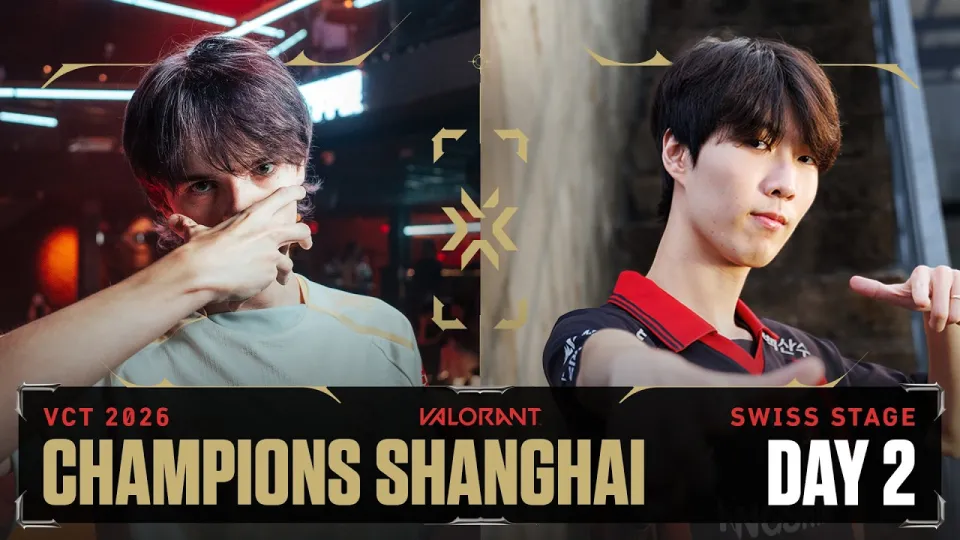
Video: VALORANT Champions Shanghai — Group Stage — Day 2
Need articles like this for your video? They help promote it on YouTube and Google — order them in the Telegram bot @sat_sit_bot. It writes articles around your video, embeds the video and publishes them on popular niche websites (no ads). Try it free: 50 articles on us.
VALORANT Champions Shanghai is the 2026 world championship of the VALORANT Champions Tour, running from September 24 to October 18 with sixteen teams from Americas, CN, EMEA and Pacific fighting for the year's biggest trophy. The group stage opened with Day 2 of play, published by the VALORANT Champions Tour channel on September 25, 2026, and the broadcast set the tone for a tournament where familiar names meet a fearless new generation. For schedules, bracket updates and announcements as the event unfolds, the official feed at VALORANT Esports on X is the fastest source.
What the VALORANT Champions Shanghai format looks like
The world championship brings sixteen teams together, split across four regions, and the group stage is where the field gets cut down before the playoff bracket. Every region sends its qualified representatives, and the opening days are traditionally the most volatile part of the event: teams arrive with different levels of stage experience, different map pools, and very different ideas about how the current patch should be played.
A few structural facts define the event:
- Sixteen teams qualify from Americas, CN, EMEA and Pacific.
- The tournament window spans September 24 to October 18, covering group play and the playoff run to the final.
- Group stage days are broadcast as full VODs, which is why Day 2 exists as a multi-hour block rather than a highlight reel.
- The winner is crowned the 2026 VALORANT World Champion.
The regional split is the part that generates the most debate every year. China fields four slots at the event, and that number is the single most contested detail in the community whenever group stage results go badly for CN representatives.
Why Day 2 of the group stage mattered
Day 2 is usually where the group stage stops being theoretical. On the opening day, teams can hide behind preparation and unfamiliar opponents; by the second day, the bracket math starts to bite, and a single loss changes what every following match means. The 2026 season made that pressure heavier than usual, because the year had already produced two different Masters champions. When two separate teams prove they can win international trophies in the same season, no group is safe, and no favorite is safe either.
The broadcast itself leaned into that. Full-day VODs from the VALORANT Champions Tour are built for viewers who want the complete picture: drafts, mid-round calls, economy decisions and the slow collapse of a team's map plan. That is also why the comment section on Day 2 filled up with arguments about pacing, regional strength and whether certain matches looked one-sided.
Regional slots and the China debate
The most repeated criticism around the event concerns how many slots China receives. Viewers argued that four CN representatives is too many when results do not hold up, and some suggested merging the region into Pacific so that only the strongest teams reach international events. It is a familiar argument in VALORANT esports, and it tends to resurface whenever a region's teams exit early.
The counter-argument is structural rather than emotional. A region with its own league, its own audience and its own talent pipeline needs a guaranteed path to the world stage, otherwise investment dries up and the region never develops the depth that critics are asking for. Riot Games has consistently treated CN as a major region for exactly that reason, and the mobile-first expansion in China shows how seriously the market is treated.
What is fair to say is that slot allocation and competitive results are two different conversations. A region can deserve its slots and still underperform at a given event. Those two facts do not cancel each other out, even when the group stage produces lopsided scorelines.
Reading a full-day VOD without spoilers
Full-day VODs are the best and worst way to follow a tournament. They preserve everything, but they also bury results under hours of footage. A few habits make them much easier to watch:
- Use the chapter markers and timestamps in the description or pinned comment to jump between matches instead of scrubbing.
- Decide in advance whether you want results spoiled, because thumbnails, chat and comment sections will leak outcomes immediately.
- Watch the veto and the first three rounds of each map; that is usually enough to understand how a series is going to be played.
- Skip the post-match interviews if translation delays bother you, or watch them for the player reactions that never make highlight reels.
The spoiler-avoidance problem is real enough that community members regularly post spoiler-blocking timestamps for major broadcasts. If you are watching a day behind, that is the single most useful resource in the comments.
Skill gaps, blowouts and what they actually mean
One recurring complaint about the group stage is that some series look like mismatches, with viewers comparing them to ranked games between very different skill levels. Blowouts at an international event usually come from three places: a map pool that one team cannot contest, a preparation gap in the opening rounds of a map, or a mental collapse after losing a close first map.
That matters for Pick'Ems. Predicting the group stage is easier when you accept that regional depth varies, and harder when you assume every qualified team is roughly equal. The viewers who called the group stage an easy prediction exercise were reading the same signal: some regions arrive at the world championship with a much narrower margin for error than others.
None of this makes the group stage pointless. Blowouts establish seeding, expose weaknesses that playoff teams will exploit, and give underdog rosters the experience they need to close the gap in future seasons.
Broadcast production and the interview translation question
Production choices are part of the viewing experience, and Day 2 drew complaints about how long translated interviews take. A ten-second answer can stretch to thirty seconds once interpretation is added, which breaks the rhythm of a post-match segment. It is a real trade-off: translation is what makes CN and Pacific players accessible to a global audience, but the pacing cost is visible.
On the positive side, the 2026 broadcast package includes the partner lineup supporting the season: AWS, Coinbase, EWC, ENC, Globant, HyperX, Mastercard, OnePlus, Red Bull, Secretlab and Verizon. That backing is why the event can run a full month of coverage across YouTube, Twitch and Kick simultaneously.
Useful links
- Official VALORANT Esports news and event hub: https://www.valorantesports.com
- VALORANT Esports on X: https://x.com/valorantesports
- VALORANT Esports on Facebook: https://www.facebook.com/ValorantEsports/
- VALORANT Esports on Instagram: https://www.instagram.com/valorantesports/
- VALORANT Esports on TikTok: https://www.tiktok.com/@valorantesports
- Live broadcasts on Twitch: https://www.twitch.tv/valorant
- Event photos: https://www.flickr.com/photos/valorantesports/
What Shanghai decides for the rest of the season
The group stage at VALORANT Champions Shanghai is not just a filter before the playoffs; it is the clearest measurement of where each region actually stands after a season of upsets. Sixteen teams entered, four regions are represented, and the road runs from September 24 to October 18 until one roster lifts the trophy as the 2026 VALORANT World Champion. The Day 2 broadcast from the VALORANT Champions Tour captures that process in full, including the blowouts, the comebacks and the arguments that follow every result. Watch it with the bracket open, and follow VALORANT Esports on X so you never miss a schedule change or a playoff seeding update.
Key takeaways
- VALORANT Champions Shanghai runs from September 24 to October 18 with 16 teams from Americas, CN, EMEA and Pacific.
- Day 2 of the group stage was published on the VALORANT Champions Tour channel on September 25, 2026.
- The 2026 season saw new contenders rise and two different Masters champions crowned before Shanghai.
- China holds four of the sixteen slots at the event, a point viewers argued about in the comments.
- Official VCT updates and announcements are posted through https://x.com/valorantesports.
Source: VALORANT Champions Shanghai — Group Stage — Day 2 · Markdown version
Questions & answers
How many teams play at VALORANT Champions Shanghai?
Sixteen teams qualified for the event, drawn from four regions: Americas, CN, EMEA and Pacific. They compete across the group stage and playoffs between September 24 and October 18, with the winner becoming the 2026 VALORANT World Champion.
Why do viewers complain about China having four slots?
The criticism is that four CN representatives is too many when results at international events do not hold up, and some fans suggest folding the region into Pacific. The opposing view is that a region with its own league and audience needs a guaranteed path to the world stage to keep developing talent.
Is the group stage of VALORANT Champions easy to predict for Pick'Ems?
It depends on how much you trust regional depth. Some viewers found it straightforward because certain regions arrived with a much narrower margin for error, which produced lopsided series. Others were caught out by the fact that two different teams won Masters events during the same season.
What is the best way to watch a full-day VOD without spoilers?
Use the timestamps posted in the pinned comment or description to jump between matches, and avoid the comment section until you have finished. Community members often post spoiler-blocking timestamps specifically for major broadcast days, which is the most reliable way to stay unspoiled.