How to Survive as a Solo Rust Builder Against 200 Hunters
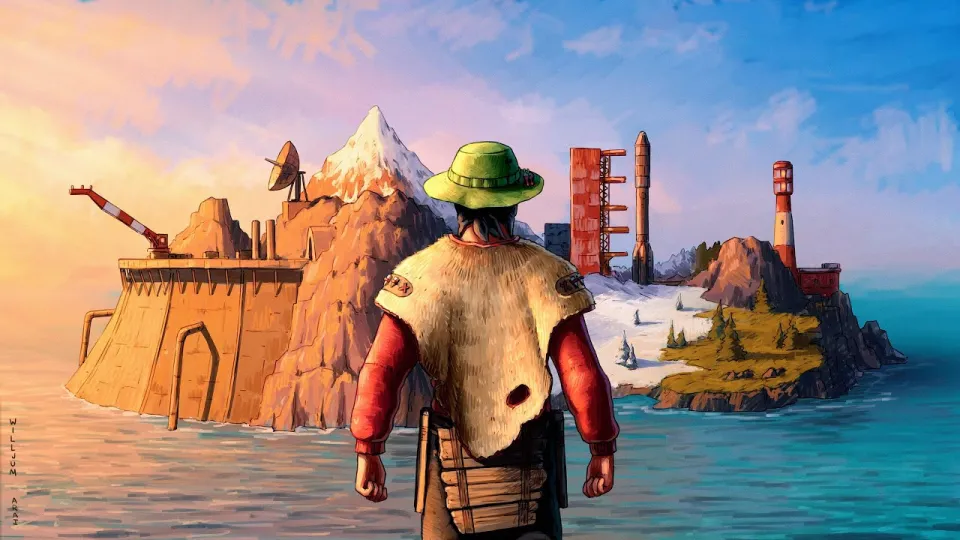
Video: When a Solo Rust builder Vs 200 Hunters...
Need articles like this for your video? They help promote it on YouTube and Google — order them in the Telegram bot @sat_sit_bot. It writes articles around your video, embeds the video and publishes them on popular niche websites (no ads). Try it free: 50 articles on us.
Surviving as a solo Rust builder against 200 hunters comes down to three things: a hidden, heavily honeycombed base, a prep phase spent on tools rather than decoration, and the discipline to move loot in small, quiet trips instead of one big haul. The format Willjum ran on his own server turns the usual Rust solo survival loop into a server-wide manhunt, where every other player has one goal — finding the builder and taking everything. If you want to support more experiments like this one, the channel's Patreon page is here: support Willjum on Patreon.
The setup is simple to describe and brutal to play. One player builds; everyone else hunts. That inverts normal Rust priorities, because the threats are not a raid group that shows up once a wipe — they are constant, uncoordinated and everywhere, and they know roughly what you are doing.
What the solo Rust builder versus 200 hunters format actually is
The format is a one-against-many survival scenario in which a single builder tries to establish and hold a base while a large pool of hunters competes to find it. The number in the title is the scale of the opposition, not a single coordinated clan: dozens of independent players sweeping the map, checking monuments, following footsteps and trading information.
That changes the math of Rust completely. Against a clan you can predict behavior — scouts, a raid window, a push. Against a crowd you cannot, because each hunter is improvising. Some will camp roads, some will check caves and forests, some will simply farm and stumble into you. The builder's advantage is that the hunters also compete with each other, so they rarely commit fully to one search area for long.
A few structural details define the run:
- The builder starts alone, with no teammates to watch doors or cover farming runs.
- Prep time is limited, so the early game is about placement and tools, not aesthetics.
- Every death is expensive, because the hunters only need one good find to end the run.
- The map itself becomes the opponent: popular monument routes are the most dangerous ground on the server.
How to choose a base location when the whole server is hunting you
Base location decides more of the outcome than any other decision, because a solo builder cannot defend against numbers — only against being found. The winning principle is to build where traffic is low and sightlines are short, and to accept a worse loot neighborhood in exchange for silence.
Practical rules that hold up in this kind of scenario:
- Skip the obvious spots. Coastal builds near spawn beaches, flat ground next to monuments and cliff bases overlooking roads are the first places a searching crowd checks.
- Use terrain over walls. A build tucked into a forest pocket or against a rock face hides its footprint and makes the silhouette harder to read from a distance.
- Build small first, expand later. A 1x1 or 2x1 with a furnace and a box is enough for the first hours; a large shell attracts attention before you can fill it.
- Keep the door count low but the honeycomb thick. Extra airlocks slow you down daily; extra layers of stone stop the one raider who does find you.
- Plan an escape route. A second entrance or a window drop toward cover turns a lost fight into a survivable one.
A useful test: if you can see a road, a monument or a common travel path from your front door, a hunter can see you too. Move.
Prep priorities for a solo builder with limited time
Prep time should be spent on the tools that compound — workbench, furnaces, metal tools, and enough materials to rebuild — rather than on stockpiling loot you cannot defend. A solo builder who loses a base but keeps a workbench and a stash nearby is still in the run; one who loses everything at once is finished.
A workable order of operations:
- Secure a starter base with a sleeping bag, a small box and a furnace before anything else.
- Push the workbench tier so you can craft weapons, armor and building materials without relying on loot.
- Bank stone and wood in bulk, because honeycomb is the only defense that scales against a crowd.
- Split your storage. Two small stashes in different places beat one full loot room; a single lucky find should never end the run.
- Craft mobility — a horse or a vehicle gives a solo player the ability to leave a bad situation faster than any fight.
Gear matters less than people assume in this format. A hunter who finds an empty base with a locked tool cupboard still has to spend explosives; a builder who dies with a full kit in the open has handed over the run for free.
How to move loot and farm without being seen
Farming quietly is a skill of its own when the server is looking for you, and the core rule is to never carry more than you can afford to lose in a single trip. Most solo deaths in manhunt-style scenarios come from a player hauling a full inventory of ore across open ground.
Habits worth building:
- Farm at the edges of the map and in tree cover, not along roads or near monuments.
- Empty your inventory into stashes every few minutes instead of every half hour.
- Travel with a purpose and a route; wandering players look like targets and behave like them.
- Use nighttime and bad weather for long trips, and daylight for short ones.
- Listen more than you look — footsteps, doors and gunfire tell you where the crowd is concentrated.
Not every encounter has to be a fight. In the video, a passing player hands over gears and rope instead of shooting, which is a reminder that a solo run against a crowd still contains individuals who would rather help than hunt. Reading a player before opening fire is part of survival.
Common questions and doubts about the format
Most of the debate around this kind of challenge is about fairness and repeatability, not about whether it is fun to watch. A single builder against a large hunter pool is asymmetric by design; the interesting part is how the builder compensates with preparation, concealment and movement rather than raw fighting power.
Recurring points of discussion:
- Is it actually survivable? Long-term, no — the run ends when enough hunters converge. The measure of success is how long the base stands and how much the builder keeps, not whether the base never falls.
- Would more prep time change it? A longer prep window shifts the balance toward the builder, because honeycomb, stashes and a second base all scale with time. A short window keeps the pressure on.
- Does a duo or trio version work? Yes, and it is the most requested variation, since a second player covers farming, doors and fights that a solo player simply cannot.
- Why does the builder not just fight? Because trading kills with a crowd is a losing exchange: hunters can respawn and return, while the builder's gear and time cannot be replaced at the same rate.
Useful links
- Willjum on Patreon — support the channel and the experiments behind videos like this one.
- Willjum on Twitch — live Rust survival streams.
- Willjum on Twitter — updates and announcements.
- Creative Commons Attribution 4.0 — license referenced for the music used in the video.
Final thoughts on the solo builder versus the crowd
The value of this format is that it strips Rust down to its core tension: a base is only as good as the information the enemy has about it. A solo builder who hides well, splits loot, keeps a workbench running and avoids open-ground farming can outlast a much larger, much less organized crowd for a surprisingly long time. The run ends eventually — that is the point — but the decisions along the way are a clean lesson in base placement and resource discipline for any solo player. Willjum's channel is worth following for this kind of experiment, and if you want more of them, the Patreon page is where that support goes.
Key takeaways
- Willjum's challenge pits one solo builder against a server of roughly 200 hunters hunting him for loot.
- The builder gets a head start to farm, place a base and stash supplies before the hunt begins.
- Base placement and honeycombing matter more than size when every player on the map is hostile.
- Friendly deliveries of gears and rope show that not every encounter against a solo ends in a fight.
- Viewers pushed for sequels with duos, a 24-hour prep window and multi-creator versions of the format.
Source: When a Solo Rust builder Vs 200 Hunters... · Markdown version
Questions & answers
How many hunters does the solo builder face in the video?
The title puts the opposition at roughly 200 hunters, meaning a large pool of independent players rather than one clan. Because they are uncoordinated, they compete with each other, which is the builder's main advantage.
What is the most important decision for a solo builder in this scenario?
Base location. A solo player cannot win a straight fight against numbers, so the goal is to avoid being found: low-traffic terrain, short sightlines and a small footprint matter more than size or loot quality.
Would a longer prep phase make the challenge easier?
Yes. Extra prep time lets the builder thicken honeycomb, spread stashes across several spots and set up a second base, all of which scale against a crowd. A short prep window keeps the pressure on the builder.
Could this format work as a duo or trio run?
It would work and is one of the most requested variations, since a second player can cover farming, doors and fights that a solo player has to abandon. Multi-creator versions, where several builders are hunted on one server, are another natural extension.