5 Ways Wardogs Season 2 Rain Changed the Game for Shroud and His Squad
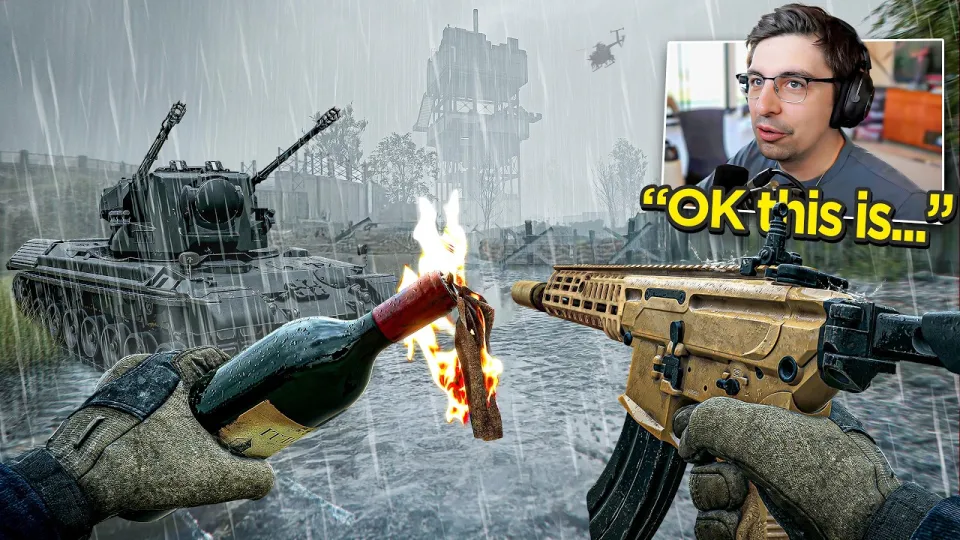
Video: Wardogs Is a Completely Different Game Now...
Need articles like this for your video? They help promote it on YouTube and Google — order them in the Telegram bot @sat_sit_bot. It writes articles around your video, embeds the video and publishes them on popular niche websites (no ads). Try it free: 50 articles on us.
Wardogs Season 2 has added heavy rain, and that single weather condition has changed how the extraction shooter plays: visibility drops, long-range sniping becomes unreliable, and close-quarters fights decide most encounters. In practice, the rain turns Wardogs into a different game, where ammo choice, optics and squad communication matter more than raw aim. You can follow the full breakdown of the new season on the shroud podcast on Spotify, where the crew walks through their first rainy raids.
Why Wardogs Season 2 rain feels like a different game
The rain is not a cosmetic overlay; it is a systemic change that touches every layer of a raid. Water on windshields, reduced contrast and heavier fog compress the effective engagement distance, so fights that used to start at 200 meters now begin inside 50. Squads that built their loadouts around long-range optics find themselves over-scoped and under-armed, while players who favor compact rifles and shotguns suddenly have the advantage.
The change also reshapes map flow. Landmarks that were safe to cross in clear weather become risky because you cannot see who is watching from a ridge, and bridges or open fields that once allowed fast rotations now demand slow, covered movement. Players report that familiar areas feel like new zones, with one squad describing how pushing out of a southern tower toward a bridge completely changed their read of the map. That disorientation is the point: the weather forces re-learning terrain you thought you knew.
The five biggest changes rain brings to Wardogs combat
- Long-range sniping loses its edge. Even at around 190 meters, targets blur into the rain, so scoped rifles that dominated clear-weather lobbies now miss shots they would previously land. Sniping is not dead, but it is no longer the default answer to every open sightline.
- Close-quarters weapons rise in value. SMGs, compact rifles and shotguns benefit from fights that start at short range, because the enemy appears suddenly and the player who reacts first wins.
- Ammo type becomes a real decision. Armor still matters, and HP (hollow-point) rounds that punish limbs are the practical counter when you cannot reliably land headshots through rain and muzzle flash.
- Thermal and infrared optics get stronger. Anything that improves target acquisition in low contrast becomes premium gear, and players expect infrared goggles to be even more valuable as the rain persists.
- Rotations slow down. Squads move through cover, hug buildings and avoid open ground, which lengthens raids and increases the chance of unexpected third-party contact.
What the rain does to visibility and sniping
The core effect of the rain is contrast loss, and it hits scoped players hardest. A shooter lined up on a distant ridge can no longer confirm whether the shape ahead is a bush, a rock or a prone enemy, and the muzzle flash that once gave away a sniper's position is now one more smudge in the haze. That makes holding long angles less rewarding and pushes engagements toward buildings, alleys and treelines where the distance is measured in meters rather than hundreds of meters.
For players who built their identity around marksmanship, this is the adjustment period. The instinct to stop and scope still fires, but the information simply is not there. The practical response is to carry a secondary that works inside 30 meters, to use sound more than sight, and to accept that a fight you cannot see is a fight you should not take. Rain rewards patience and positioning over precision.
Armor, HP ammo and the leg-shot problem
Armor is the reason body shots feel weak in Wardogs, and rain makes that weakness more obvious because headshots are harder to land. The reliable answer is HP ammunition aimed at the legs, which bypasses the armor plate and drains health quickly. The catch is that this requires discipline: players who hear the advice and then keep firing at the torso and helmet will conclude the weapon is terrible when the real problem is the target zone.
That pattern shows up constantly in squad play. A teammate calls out the fix, the shooter acknowledges it, and then the magazine still goes into the chest and head, followed by a complaint about how bad the gun is. The lesson is mechanical rather than tactical: pick the HP loadout before the raid, commit to the leg-shot habit, and judge the weapon only after the ammo and the aim point match the situation. A compact SMG with HP rounds is one of the most forgiving setups in rainy, close-range fights.
Squad communication versus bigger, uncoordinated lobbies
A six-player squad in one voice channel has an advantage that raw numbers do not erase. Larger groups of twenty players are rarely a single coordinated unit; they are many individuals who happen to share a lobby, and they do not call out contacts, share ammo or converge on a target. A tight squad that relays positions, covers angles and pushes together can dismantle a bigger but fragmented force piece by piece.
The flip side is that communication only helps if it is acted on. Calling out an enemy inside a building and then walking in with your inventory open to repack magazines is worse than saying nothing, because the call creates false confidence. Rain amplifies this: with less visual information, the squad depends on voice, and every callout needs a corresponding action, whether that is a pre-fire, a grenade or simply holding the door.
Recoil control and gear discipline in low visibility
Mechanical skill still decides individual fights, and the rain does not change recoil patterns, only the distance at which you apply them. Watching a high-level player control a spray at close range is a reminder that the fundamentals transfer: pull down, track the target, and let the weapon do the work. What changes is the margin for error, because a missed burst in clear weather can be corrected at range, while in rain the enemy is already inside your guard.
Gear discipline follows the same logic. Repacking magazines mid-fall, looting in the open or swapping optics during a firefight are all decisions that cost seconds, and seconds are what the rain takes away. The players who adapt fastest are the ones who treat every action as something to complete behind cover, with the weapon ready and the next move already planned.
All links from the video
- Shroud podcast on Spotify — the show where the crew discusses the new season.
- Logitech G — peripherals, with the promo code shroud mentioned in the video description.
- Maingear x shroud PC — the prebuilt system referenced as the perfect PC.
- shroud on Twitter — updates and stream announcements.
- shroud on Twitch — live gameplay, including rainy Wardogs raids.
Conclusion
Wardogs Season 2 uses rain as a design lever rather than a visual filter, and the result is a season that rewards adaptation over habit. Sniping weakens, close-range loadouts and HP ammo gain value, thermal optics become premium gear, and coordinated squads outperform larger but scattered groups. The players who thrive are the ones who rebuild their kits, slow their rotations and act on every callout. For a full look at how these rainy raids play out, watch the breakdown from the channel shroud, and catch the extended discussion on the shroud Spotify show.
Key takeaways
- Wardogs Season 2 introduces heavy rain as a persistent weather condition that changes visibility and combat pacing.
- Rain sharply reduces long-range visibility, weakening sniping even at roughly 190 meters.
- HP ammo and leg shots become the reliable counter to armored opponents in low-visibility fights.
- Squad communication in a shared voice channel gives small groups an edge over larger uncoordinated lobbies.
- Infrared and thermal optics gain value in rain because they cut through the reduced contrast.
Source: Wardogs Is a Completely Different Game Now... · Markdown version
Questions & answers
Does the rain in Wardogs Season 2 make sniping useless?
Not useless, but far less reliable. Visibility drops enough that targets blur even around 190 meters, so scoped rifles lose the consistent long-range value they had in clear weather. Sniping still works when you hold shorter angles or use optics that cut through low contrast, but it is no longer the default answer to every open sightline.
Why do players say a gun is bad after being told to shoot legs?
Because the advice only works when the ammo matches it. Armor absorbs torso and helmet hits, so HP rounds aimed at the legs are what actually drain health quickly. If a player keeps firing at the chest and head with the wrong ammo, the weapon feels weak even though the setup, not the gun, is the problem.
Is a small squad at a disadvantage against a 20-player lobby?
Usually not, if the small squad is coordinated. Large groups in these lobbies are often many separate players who do not share callouts or converge on targets. Six players in one voice channel who relay positions and push together can pick apart a bigger but fragmented force.
Which gear becomes more valuable in rainy raids?
Anything that improves target acquisition in low contrast. Infrared and thermal optics are expected to grow in value because they cut through the reduced visibility, and compact weapons with HP ammo become more practical than long-range scoped rifles. Carrying a secondary that works inside 30 meters is also a sensible adjustment.